
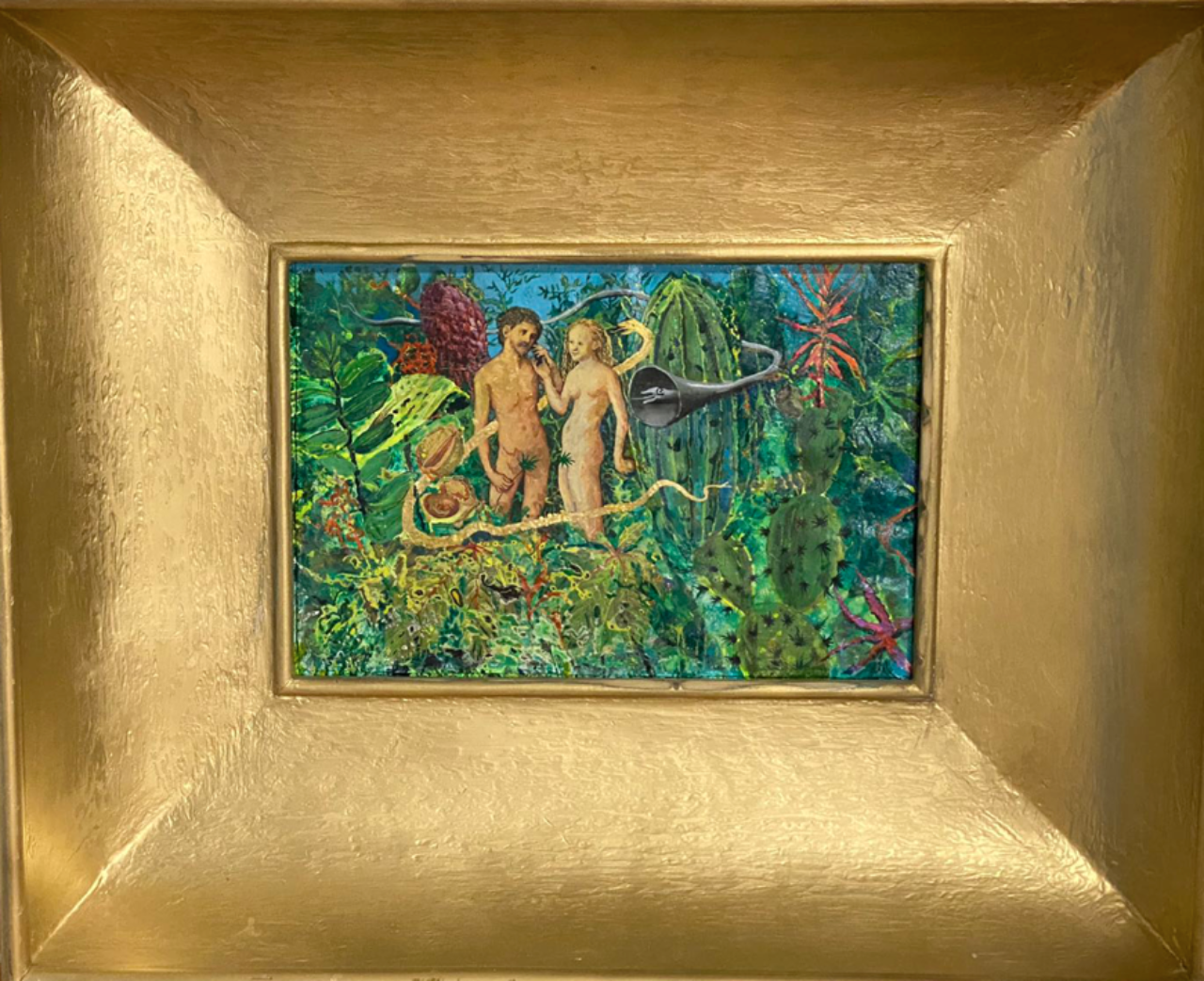
He Gong, “Year of the Snake,” Acrylic on wood, 19” x 13,” 2025
$5,700.00
In Year of the Snake, He Gong fuses Western iconography with subversive allegory, placing Adam and Eve in a riotous, cacti-strewn Eden that pulses with tropical excess and visual noise. Amidst this lush reimagining, the serpent coils not with malice but almost with theatrical flair—its tail morphing into a Cultural Revolution–era megaphone, a recurring motif in He Gong’s work. The megaphone, once a tool of mass persuasion, here whispers the original temptation, linking biblical fall to ideological seduction. The vibrant, surreal flora evoke both the Garden and the jungle of historical consciousness—where innocence, desire, and control are always entangled. Painted with wit and layered critique, the work blurs creation myth with propaganda, asking: who scripts our origin stories, and to what end?
Acquisition Details
• Complimentary regional delivery within Whatcom County
• Professional art handling and installation available upon request
• Installment acquisitions available upon request
Related products
-
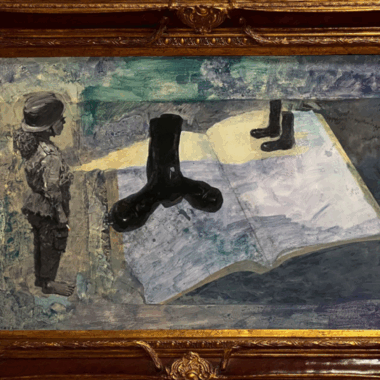
He Gong, “The Shoes You Wear Set Your Path,” Acrylic on paper, 36” x 24,” 2025
$8,000.00 -
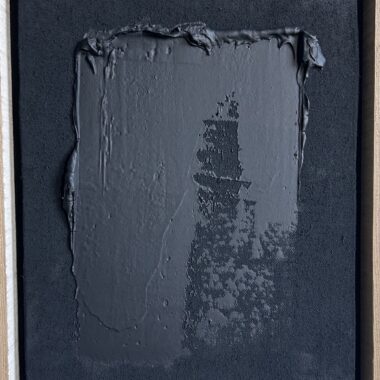
Matthew Remsbecher, “Slip,” Plaster and paint, 12″ x 16,” 2025
$800.00 -
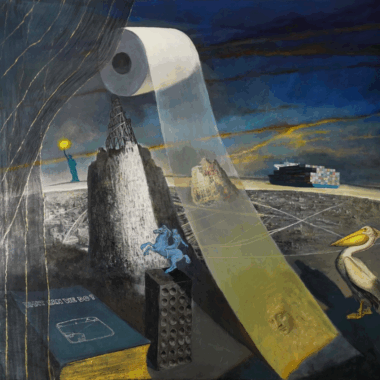
He Gong, “The Distant Canal,” Acrylic & oil on canvas, 48” x 44,” 2025
$9,200.00 -
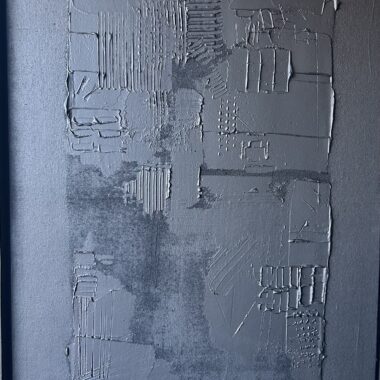
Matthew Remsbecher, “Singe,” Plaster and paint, 30″ x 50,” 2025
$2,750.00
Reviews