Sophia Grace Gallery, in collaboration with Igneus Press, presents——
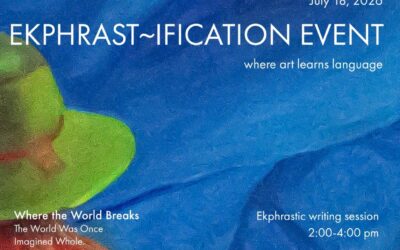
🎨 EKPHRASIFICATION
A groundbreaking 1-day ekphrastic writing workshop, held within the “Where the World Breaks” exhibition.
✍️ Write Among the Paintings
We invite you to step into the gallery, immerse yourself among the original artworks, and explore the creative edges between visual art and words. Whether you are a poet, prose writer, or a first-time lover of ekphrastic writing, this is a space where inspiration takes flight. Connect with local creatives, exchange ideas, and let the art speak through you.
🌏 About EKPHRASIFICATION
EKPHRASIFICATION is a groundbreaking recurring series hosted by Sophia Grace Gallery after each new exhibition opening. It is designed as a “bridge for cross-cultural dialogue between Eastern and Western arts and letters”. Each session draws inspiration from the current exhibition, inviting writers from diverse cultural backgrounds to step into the gallery and respond to visual art through their own languages and perspectives.
All written works produced during the workshop will be compiled into an annual anthology and formally printed and published—extending the dialogue between paintings and poetry from the gallery walls to the printed page, as a lasting testament across time and space.
Previous anthologies have featured outstanding works from both local and international contributors, receiving wide acclaim from the literary and art communities.
📅 Event Details (This Session: Where the World Breaks)
Date: Thursday, July 18
✏️ Ekphrastic Writing Session
2:00 PM – 4:45 PM
🍷 Social Hour & Light Catering (provided by Leader Block Trattoria & Bar)
4: 00 PM – 4:45 PM
🎤 Open Mic Reading
4: 45 PM – 6:00 PM
📚 Literature on ekphrasis, as well as previous published anthologies, will be provided on-site for reference.
🎟 Registration Information
– Registration Fee: $10
(scholarships available upon request)
– Limited to 50 attendees per session—secure your spot early.
🔗 Register Now — spaces are limited and filled on a first-come, first-served basis.
About Ekphrastic Writing
Ekphrasis originates from the ancient Greek rhetorical tradition, referring to the vivid description and creative reinterpretation of visual artworks through language. In this workshop, you will begin with the paintings and allow words to converse with images, breathing new narrative life into what you see. Whether you write in Chinese, English, or any other language, your words will become an essential voice in this cross-cultural dialogue.
Sophia Grace Gallery and Igneus Press look forward to meeting you at the intersection of painting and poetry. Every word you write may become a page in the next anthology.
✨ Editor’s Note:
When a painting is no longer silent, when a poem takes on color and form—EKPHRASIFICATION is that moment when the two ignite each other. You don’t need to already be a “writer.” All you need is to be willing to look, to feel, and to write down the first word.
Venue: Sophia Grace Gallery — Within the Where the World Breaks exhibition
Presented by: Sophia Grace Gallery × Igneus Press
Catering Partner: Leader Block Trattoria & Bar
Anthology Publisher: Igneus Press

0 Comments